In David Byrne’s “Playing the Building”, the sound produced is very specific to that individual building. If he set up the same strings and techniques in another building, due to difference in architecture, the same sounds could not be reproduced. This idea of sound being specific to certain spaces is similar to Rath’s idea about sound in churches. However, Rath differs a little bit from Byrne as he goes on to make the claim that depending on the culture/religion, certain soundscapes can be made. He writes about how in the European church, the medieval chancel is constructed so the priest was “facing away from the congregation, [his] voice never carried directly to the listeners in the nave. It began its trip toward them as an echo, reflected several more times before reaching any ears” (131). Different from the European church, for the Chesapeake Anglicans, in their Jamestown Chapel, “sounds were projected along the length rather than the breadth of the chapel. Where one was seated was an indicator of social standing. Those in the front heard more of the direct signal. Those in the back heard less of it, and thus more reverberation” (135). For each of these different peoples, their religious structures were built differently according to their separate cultures, religions, and religious beliefs. This idea of sounds being unique to spaces and being deliberately made for the separate religious buildings can connect to Blesser and Salter’s idea of earcons in “Ancient Acoustic Spaces”. An earcon is defined as “a sonic event that contains special symbolic meaning not present in the sound wave” (187). Looking at the deliberate creation of spaces for sounds can show us greater meaning of the sound itself. Blesser and Salter wrote that “the Mayans has a heightened auditory spatial awareness”. This was evident to many people at a Mayan ruin, including a visitor who observed “distinct howls and whistles from stone structures when wind arrived from a particular direction, as if it were giving early warning of imminent storms and hurricanes” (189). This shows that there are deliberate actions of building certain spaces to make meaningful sounds. The idea of sound being unique to spaces created by Byrne and enforced by Rath and Blesser and Salter also leads me to continue to explore the question of if a soundscape is a place you go versus a thing you make.
How Creative are Covers?
Make it sound like you, not the original artist. Find something new by mashing different styles together, but make sure your version feels contemporary and says something about the times we currently live in as well. Perhaps most importantly, make sure this new version you have created is out of everyone else’s reach so as to steal attention from the original (How to Create…). These are only a few tips for how to create the perfect cover song in a 2015 BBC article appropriately titled “How to create the perfect cover version”. But what is a “perfect” cover song? Often, the public is unaware that a popular song is actually a cover of a lesser-known original. Take Gladys Knight & the Pips’ “Midnight Train to Georgia” for example. The song was originally shot down by Gladys and recorded as Jim Weatherly’s “Midnight Plane to Houston”. It took another few years, reimaginings, covers as well as even a style transition for Gladys and her backup singers to consider the song again (Padgett). The rest is history, but the long road and many covers taken for that song to get to that point proves that BBC’s formula for the perfect cover song may not be as foolproof as one would like to believe, some of the most popular covers being a little off-the-wall themselves.
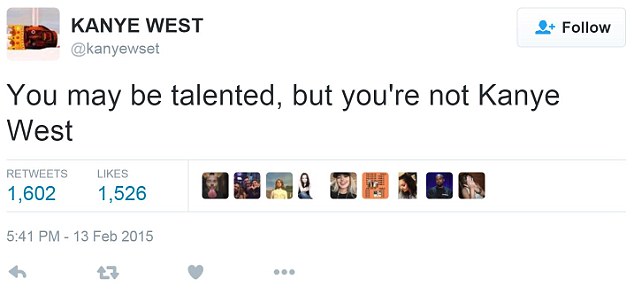
Stephen Thompson, editor and reviewer for NPR Music and author of “The Good Listener: Can You Build The Perfect Cover Song?” believes that “good cover songs are about necessity” (Can you build…). If the original song is amazing and nothing can be done to improve upon it, then why would someone need to change it whether that be a cover or a remix? For this reason, artists must be careful about what songs they choose to focus their attention upon as some songs work better than others for an artist to cover. Thompson argues that a general disguise of the genius of the songcraft of a song gives an artist reason to reinvent a song or re-create a song word-for-word, but some artists such as Kanye West disagree. A self-proclaimed “creative genius, and there’s no way around it”, West is famous for his narcissism and not following the rules when it comes  to making music, meaning he most definitely won’t shy away from taking a song and putting his own spin on it no matter how amazing his fans or outlandish his critics say it is (jnelliott). Two songs West uses outside material from are “Pt. 2” from the Life of Pablo and “Blood on the Leaves” from Yeezus. Both were fairly successful and broke Billboard’s Hot 100 chart, yet neither follow any one specific cover song formula. Taking BBC’s article once again, for example, one can see how two very different cover songs can be equally successful while ignoring the status quo surrounding how they should be written.
“Pt. 2” is a complete reimagining of Desiigner’s “Panda” and appears on West’s seventh studio album titled the Life of Pablo. The first point made in the BBC article was that a cover has to “sound like [the cover artist], not the original artist”, but this brings into question whether or not Kanye West even has a particular sound to call his own because “Pt. 2” doesn’t sound that much different from the original “Panda” (How to Create…). As a matter of fact, half of “Pt. 2” is Desiigner’s version with roughly thirty seconds of The Life Of Pablo-esque lyrics and a very slightly remixed beat to accompany it on either side. Two other points of BBC’s article are to “unearth new meaning” not seen in the original song and to make sure your cover says something about the current times. This is questionable in “Pt. 2” as both “Pt. 2” and “Panda” speak of West and Desiigner’s immense respective successes. West does change some lyrics in order to bring attention to the long road he had to traverse in order to get to “Atlanta” and even mentions his own very successful Yeezy clothing line as one of his bragging points, but the gist remains the same between songs. One could guess what “Panda” is about after listening to “Pt.2”. “Blood on the Leaves”, however, is a different story.
”Blood on the Leaves” hails from West’s sixth studio album titled Yeezus. It is the opposite of “Pt. 2” as it samples Nina Simone’s “Strange Fruit” rather than covering it, but the BBC article can still be applied. “Blood on the Leaves” accomplishes the feat of redefining the sound of a song to fit the cover artist considerably well as the whole song sounds like it belongs on Yeezus, even Simone’s “parts” which come from a completely different song in a completely different time period. As for unearthing new meaning from the original, Simone’s “Strange Fruit” is a song written about historic black struggles, specifically the lynching of African American males in the Jim Crow south. Why, then, is West using clips from that song in his own song about the struggles of a high-class, arguably toxic, twenty-first-century relationship? Sure, new meaning is brought to Simone’s original in the context of current times, but not the new meaning co-founder of The Velvet Underground John Cale meant when he said, “If you unearth new meaning, or someone else realizes something, it’s, ‘Holy cow! That’s what that song is about!? It’s great” (How to Create…). The title might vaguely suggest it, but one wouldn’t know that “Strange Fruit” is about the struggles of black men during the Jim Crow Era after listening to “Blood on the Leaves”. “Pt. 2” is very different from “Blood on the Leaves” in West’s manner of covering, but they may not actually be as different as they seem at their first glance.
Although West chooses to listen to and ignore different steps BBC outlined in order to create the perfect cover song for both “Pt. 2” and “Blood on the Leaves”, he chose to use two of the same tips in both songs. Arguably one of the most important of BBC’s points is to “find something new by mashing different styles together”, which West most definitely did in both “Pt. 2” and “Blood on the Leaves” (How to Create…). By mixing Desiigner’s trap hit with the Life of Pablo’s smooth, deliberative lyrics, West “put the song out of everyone else’s reach”, as BBC’s last point instructs (How to Create…). “Blood on the Leaves” does essentially the same thing by mixing Simone’s jazzy, old-school, drawn-out vocals with Yeezy’s trademark fast-tempoed aggression. Why were these two songs so popular, then, if West chose to ignore some of what BBC deems are vital elements for any decent cover song? And how are they both so popular if they both chose to ignore different parts of the formula? An NPR 1A podcast titled “Take Me On: The Art Of The Cover Song” seeks to answer that question.
Joshua Johnson, host of NPR’s 1A, believes that there are many different ways to make a cover song successful whether that be “a total reimagining, like Devo singing “Satisfaction,” … or a performance that brings a new energy or feeling to the original, like Earth, Wind and Fire’s “Got To Get You Into My Life””. One of the only things that Johnson’s guests Ray Padgett, author of the book “Cover Me,”, Amanda Petrusich, staff writer for The New Yorker and Scott Bradlee, creator of “Postmodern Jukebox,” a music collective that makes vintage covers of pop songs could agree on during the nearly fifty minutes long podcast was that a cover is about the intention more than anything else. Of course, all three have their own views on what makes a cover song successful to their ears, but those criteria largely did not stay the same from person to person. Likewise, Kelsey McKinney’s father (a solid Gen X-er and avid grunge rock listener) hated Britney Spears’ “Satisfaction (I Can’t Get No)” so much he introduced her to the Rolling Stone’s original, “(I Can’t Get No) Satisfaction” (McKinney). This example proves that different cover songs are successful in different people.
Johnson and his guests didn’t seek to define a good cover song, they only sought to identify good and/or famous cover songs as well as bad/infamous cover songs and identify what made them so good and famous or bad and unpopular. What Johnson and his guests found was that no specific formula exists for a good cover song. With so many different music tastes, how could one cover song satisfy all of the wants of every audience? Furthermore, using the same formula for every cover song runs the risk of cover songs sounding repetitive and getting boring. This is where artists like Kanye West step in. Kanye makes his critics’ jobs very easy when he chooses to bend the rules in the making of his music and step out on a limb, but he has also created some very popular music despite the critics. The key to writing a good cover song is to recognize that no one specific kind of cover song exists. The more one tries to tailor a cover to their audience’s needs, the more they alienate themselves from the audience that made them famous in the first place. When an artist begins to realize that the only person they have to please with their music is themselves, they will start to please their audience too, and that’s what their music is all about.
Works Cited
Aaron Overfield. Nina Simone: Strange Fruit. YouTube, https://www.youtube.com/watch?v=BnuEMdUUrZQ. Accessed 15 Oct. 2018.
“Can You Build The Perfect Cover Song?” NPR.Org, https://www.npr.org/sections/allsongs/2013/05/15/184350690/we-get-mail-can-you-build-the-perfect-cover-song. Accessed 10 Oct. 2018.
DesiignerVEVO. Desiigner – Panda (Audio). YouTube, https://www.youtube.com/watch?v=4NJlUribp3c. Accessed 15 Oct. 2018.
How to Create the Perfect Cover Version – BBC Music. 5 Nov. 2015, https://www.bbc.co.uk/music/articles/0adabb48-dcad-4c01-9fd2-68ccff6bf8e8.
jnelliott. “‘I’m A Creative Genius, There’s No Other Way To Word It’, Kanye West Explains.” The Source, 5 Dec. 2013, http://thesource.com/2013/12/05/im-a-creative-genius-theres-no-other-way-to-word-it-kanye-west-explains/.
Kanye West – Topic. Blood On The Leaves. YouTube, https://www.youtube.com/watch?v=nn0Pu2Qun-E. Accessed 14 Oct. 2018.
—. Pt. 2. YouTube, https://www.youtube.com/watch?v=mT1LJFP7uJo. Accessed 14 Oct. 2018.
McKinney, Kelsey. “The Art of a Good Cover Song.” Splinter, https://splinternews.com/the-art-of-a-good-cover-song-1793848557. Accessed 10 Oct. 2018.
Padgett, Ray. Cover Me: The Stories behind the Greatest Cover Songs of All Time. Sterling, 2017.
“Take Me On: The Art Of The Cover Song.” 1A, https://the1a.org/shows/2018-01-18/take-me-on-the-art-of-the-cover-song. Accessed 26 Sept. 2018.
Whoopi Goldberg, Monica Lewinsky and Kate Hudson Read Kanye West’s Tweets | Daily Mail Online. https://www.dailymail.co.uk/femail/article-3475395/I-love-right-Brilliant-video-sees-stars-like-Whoopi-Goldberg-Monica-Lewinsky-Kate-Hudson-doing-dramatic-readings-Kanye-s-bizarre-tweets.html. Accessed 11 Oct. 2018.
Blog 9
Douglas reflects back on his time as a slave in chapter 2. He speaks of all the horrid images especially of one cruel overseer, Mr. Severe. A man who took pleasure in the whippings and cruelty his job allowed him. We also get another image of the clothing and sleeping arrangements for the slaves, which is obvious to us to be less than humane. However, later Douglas speaks on slaves being able to work on the “Great House Farm” and how it was such a joy (as joyful as one can be in that situation), and this drove them to sing. However, Douglas made it clear that their songs did not convey happiness or contentment. Douglas said, “Every tone was a testimony against slavery, and a prayer to God for deliverance from chains.” Song was a way for slaves to express their anger and sorrow and this usually filled their tones. Their songs gave them hope and gave others hope as well. However, when did this start and how did it become a cultural phenomenon? Music has been engraved into the culture of black people all across the country and this seems to be it’s earliest origins. The evil and pain of slavery was carried through history by voice.
Then and Now
Fredrick Douglas, a former African American slave, writes about sound in the context of slavery in the Narrative of the Life. He talks about sound in all sorts of contexts, such as the sounds of the slave driver’s horn, of the overseer’s voice, and the noises of the slaves themselves. Douglas explains that the slaves would use song as a coping mechanism and as a “testimony against slavery,” writing, “they (slaves) breathed the prayer and complaint of souls boiling over with the bitterest anguish” (Douglas 14). Slaves used song as a way to deal with their pain and unhappiness and Douglas explains that it’s a common misconception that slaves would sing songs of contentment. Similarly, Stoever explains the concept of the “sonic color line” in the introduction of her study called The Sonic Color Line. She talks about the racial politics related to sound and the racial barrier that is set by society to create various groups of sound, more specifically black and white. This method of discrimination dates back to American slavery, which Douglas clearly explains when he talks about the relationship between slavery and music.
Today, this divide undoubtable still exists. There are countless examples of the “sonic color line,” that is defined by Stoever, in modern music. Some of these examples include how white Americans react to songs such as “Work” by Rihanna. Rihanna uses patois in the chart topping song “Work”, which a lot of white Americans ignorantly called “nonsense” instead of opening their mind to different black cultures. While white listeners may hear Rihanna’s “broken” English lyrics and think it’s gibberish, she is actually crafting a cultural dancehall song using language from Barbados, which is where Rihanna is from. White ignorance is outdated, yet so societally prevalent and this idea of a “sonic color line” seems to be an unfortunate and unavoidable method of separating cultures. I am curious if this sound base form of segregating different groups of people could ever be avoided. Could society ever unite with something as beautiful and unifying as song, or will races and cultures continue to be separated?
Douglass and Covers
After going back and looking at the Frederick Douglass text I found a non traditional way to view the slave songs that are described and relate it to what was discussed the past few class periods. In class we spent a good amount of time discussing modern day sampling in music as well as cover songs, and how these samples and covers affect us as listeners. One recurring theme that seemed to be agreed upon by almost everyone who read the articles was the idea that a cover has the ability to completely change a song’s feeling and meaning. Generally covers or samples seem to stay closer to the original work stylistically but we can see this change in feeling or meaning in certain instances. This happens when the artist of the cover changes a fundamental aspect of the song. This can be the beat, singing style, lyric changing or a combination of these things. Frederick Douglass describes that the slaves, “Would sometimes sing the most pathetic sentiment in the most rapturous tone, and the most rapturous sentiment in the most pathetic tone.” In a way it can be said that when the slaves sung of the worst of their hardships in the happiest of styles, this is similar to a cover in a way. When covers of songs are sung and there are large changes to some aspect of the song we can have a very different perception of the song, and the song itself can appear to no longer be a part of the music it is accompanied by. When the slaves described by Douglass chose to sing the words of a very deep and saddening song in a generally positive style they changed how everyone who was not a slave perceived the music, as well as even some of the younger slaves (Douglass himself acknowledges he was no always aware what was being communicated through song.) The people who lived outside slavery paid more attention to how the songs were sung as opposed to the words themselves and ended up being deluded and thinking the slaves themselves were singing joyous songs, when in actuality they are singing of the most horrible things in their lives.
Singing through Sorrow
“I am going away to the Great House Farm!
O, yea! O, yea! O!”
This they would sing, as a chorus, to words which to many would seem unmeaning jargon, but which, nevertheless, were full of meaning to themselves. I have sometimes thought that the mere hearing of those songs would do more to impress some minds with the horrible character of slavery, than the reading of whole volumes of philosophy on the subject could do” ( Douglass 13-14).
The slaves from the time in which Douglass was a slave were often caught singing throughout different areas of their life. To an ignorant ear the slaves singing seemed like cries for joy and happiness. In fact, even as a slave Douglass could not truly understand the singing himself. In the later years of his life Douglass grew an understanding of the songs and lyrics and uses his new understanding to help the reader understand themselves. Many of the slaves sung as a cry for help from God. The singing was an outlet from the horrible reality of the slaves. What was most important about the lyrics was how they told the truth about slavery and to any listener the understanding that what was going on (slavery) was cause for question of character.
Douglass speaks of tone when describing the signing of the slaves. How important is tone in understanding the mood and overall feelings in voice?
Ignorance is Bliss
“The songs of the slave represent the sorrows of his heart; and he is relieved by them, only as an aching heart is relieved by its tears.”
Frederick Douglass had a way with words, an amazing feat considering the fact that he was born an African American slave in the American colonies, people not traditionally taught to read and write. As a result, not only did Douglass have to buy his own freedom in order to achieve this but he also had to teach himself to read and write once that freedom was bought. Once he had bought his freedom and learned how to read and write, Douglass finally had the tools needed to eternalize the struggle so many slaves could not as the vast majority of them were, in fact, illiterate. Douglass could now put the “songs of the slave represent[ative] of his heart” onto paper for all to read, marking one of the first firsthand explanations of the true sorrows of a slave. Douglass spoke from experience when he said that a slave is relieved by his song “only as an aching heart is relieved by its tears”. This metaphor asserts that a slave only sings in order to let go of some of their pain and sorrow, not in what appears to be a showing of enthusiastic joy at having been chosen to complete one of the most revered jobs on the plantation. Douglass states that he didn’t understand the meaning of those songs when he was a slave because he could not comprehend his woes while in their throes, but couldn’t he, as well as other slaves, have seen that their treatment and lives were absolutely horrible? I feel as if I would have noted that the clothes given to me were more than less than sustainable for a whole year if I had been a slave. Were the slaves simply choosing to be ignorant in the face of their oppressors or did they really not notice how much better their life could be?
Crossing the Color Line
Stover states very early on that “Race in America is a visual phenomenon.” (3) I found it interesting that how she then translates this largely visual form of discrimination into an auditory form by introducing the Sonic Color Line. Stover explains this term in saying “The Sonic Color Line connects sound with race in American culture, showing how listening operates as an organ of racial discernment, categorization, and resistance in the shadow of vision’s alleged cultural dominance.” (4) Something that appeared to me to challenge this concept is the example we viewed in class of Taylor Swifts cover of September, by Earth Wind & Fire. Although I struggled to find a clear definition of the characteristics of dividing line that Stover surrounds her essay around, she mentioned culture having a large role in the sonic color line. Listening and the way different people perceive sounds is somewhat subjective, so that should be kept in mind, however there is a cultural difference in the two distinct versions of September. Earth Wind & Fire’s music has spanned across many genres including, R&B, soul, jazz, and disco, which all have a certain culture surrounding them. Taylor Swift, in her rendition of the song, translates the piece in to a new genre of pop/country. The culture and history between these two groups of genres are very distinct, yet are connected by a similar song, even though sung by one artist.
Douglas lingering question in comparison to Iggy
Within my initial readings of Frederick Douglas’s narrative, I was quickly moved to a place of discomfort after reading about the horrific incidents he describes with immense details from his childhood. I kept reading through the book with the lingering question of WHY? Why am I reading this for a Voice, Noise, Sound Sense class? When I later read the article of Iggy Azalea, the comparison of how race affected these individuals was something that caught my attention. Although the inhumane actions of slavery can never compare to the racially motivated critiques that Iggy faced in her rise to fame within the rap game, the two connected in the fact that they both faced hardships due to racial predispositions. On the first page of Chapter I, in Douglas’s narrative he says, “The white children could tell their ages. I could not tell why I ought to be deprived of the same privilege.” This lack of privilege was a racially driven practice that was forced into society’s mindset due to the subjectivity of black people during the mid to early 1800’s. Iggy cannot say that she too faced the same troubles, but can argue that the comments of her wanting “to be black” hindered her career quite a bit (Azalea 30). Again the presence of racially driven thoughts that have been imposed on society’s mindset to manipulate the way we see race and what we should expect from that specific race have continued to cause conflict in many people’s lives. Slavery was driven by the thoughts invoked into the minds of many from an early age and in turn continued to develop in society. The belief that being black must be expressed in actions, speech, and appearance continue to hinder the growth of society as a whole and have originated from slavery.
Historical Thuths
“The songs of the slave represent the sorrows of his heart.” In History class in high school, I was always taught that slaves sung as a way to come together and get through a brutal day’s work. The songs were a sign of communal strength, a sign that the slaves would let their hearts suffer while the rest of their bodies did. Yet, Douglass says the opposite. He claims that the songs of the slave exhibit the releasing of sorrow from the soul, that their true feelings and identities are portrayed in the songs. I began to understand this ideology even more after watching the Beyonce “Formation” video. Beyonce’s lyrics chronicling her own upbringing and how they have not left her current identity struck a chord with me. She had not forgotten where she came from, and lives with a purpose of remembering her roots. Douglass, like Beyonce, lives with the memory of his past and will not forget those struggles. Similar to the way people may misconstrue the identity of Beyonce as solely a rich, successful woman, they could do the same for Douglass, misrepresenting him as a freed slave who is just happy to be free and moves on with no difficulty.
The Sonic Color Line and Slave Songs
In Stoever’s piece “The Sonic Color Line,” she addresses the idea of a “listening ear” and the “sonic color line.” The sonic color line can be explained as “the process of racializing sound” based on how people thing things should sound. With this idea comes the listening ear; it explains how society and culture teaches one how to listen. When we look at in the Narrative and the life of Fredrick Douglass’s, the slave songs can be interpreted using this idea of the sonic color line and the listening ear. The slave songs, “revealing at once the high joy and the deepest sadness,” were sang without any preparation or attention to timing for tune (Douglass 13). However, while fellow slaves could interpret the songs as songs of sadness, the white plantation owners did not. The sonic color line divides the society between blacks and white, causing meaning to shift on either side of the line. Douglass, a black slave, says, “I have sometimes thought that the mere hearing of those songs would do more to impress some minds with the horrible character of slavery, than reading of whole volumes of philosophy on the subject could do” (Douglass 13-14). He believes that these songs have more emotion and can portray more meaning to people than reading any book on slavery. While today, the sonic color line as progressed to allow many whites to hear the treachery of slavery in the songs, when they were singing, few whites could hear the true pain in the songs. Douglass explains how “every tone was a testimony against slavery, and a prayer to God for deliverance from chains” and how “[he] ha[s] frequently found [him]self in tears while hearing them” (Douglass 14). The songs hold more meaning for Douglass and his fellow Africain Americans who can more fully understand the struggle, having a listening ear that has been attuned to the hardships and oppression from whites. However, even despite progress, whites have still not developed a listening ear that is fully capable of understanding the slave songs. Will the sonic color line ever disappear and allow whites to understand the hardships of slavery?
Stoever and What Remains
At the beginning of the course, the sound was just a word that was debated by theorists. The theorists all sounded similar until we read Stoever, and she intertwined race and sound. She talks about all of the issues between race and sound; she writes about sounds aren’t always sounds. Stoever calls this rift between races in America, The Sonic Color Line, and she says that “the sonic color line connects sound with race in American culture, showing how listening operates as an organ of racial discernment, categorization, and resistance in the shadow of vision’s alleged cultural dominance.”(Stoever 4) Stoever says that the sonic color line is supposed to maintain the rift and tensions between the races in America. This is one of the many issues that Stoever brought up in the introduction of her book. Even though the topics of Stoever were brought up in class, there are still many questions that still need to be answered, in my personal opinion. The first question that comes to mind is, if there is an issue of racial tension through sound, then what is the solution to the issue? The reason I ask this is that throughout the paper this issue is brought up, but there is no clear solution to this issue.
The Sound of Silence
In Jennifer Stoever’s The Sonic Color Line, she discusses how specific sounds can be related to race. There are many sounds, or even lack of sound, that can be connected to painful events in race relationships. Stoever mentions that “sometimes these exchanges [of sound] led to arguments, sometimes to deep conversations; most often they resulted in silence” (Stoever 9). She gives the example of the young girl getting pulled across the ground for not leaving the Spring Valley High School classroom and explains how this exchange of racism is met with silence from teachers and administrators who could have helped give the young girl justice for this harsh treatment. In fact not only was it met with silence, but this event was flipped around to show blackness as a “dangerous noise, outsized aggression, and a threatening strength” (Stoever 3). Every time one of these incidents occurs, it is always met with either silence or people with power over changes of the law assume that the victim is at fault due to racist misconceptions. Just like how the slaves sing most when they are unhappy in Douglass’s writing, the black community has been crying out for justice during these times of horrible pain, however they have been met with silence from society. This silence causes more pain and suffering so how do we help to strip away this sonic color line using sound instead of silence?
The Sonic Color Line
“When scholars invoke nonvisual idioms of race, they are treated as ancillary to visual indicators rather than as constitutive forces in their own right” (4). This quote is significant because it brings to light the underdeveloped social conscience regarding racism amongst white Americans. Many Americans view racism as a one-dimensional issue and confine their perspectives to include only the visual aspect of it. The Sonic Color Line and the Listening Ear, by Jennifer Stoever, warns against this practice and introduces the relevant relationship between sound and race. Stoever explains how “…listening operates as an organ of racial discernment, categorization, and resistance…” (4). Admittedly, this idea was foreign to me before reading this piece, but after consideration, it resonated heavily. I’ve heard the phrase, “he/she talks black” on more than one occasion and in more than one setting but have never seriously thought about the implications of the statement. That statement is racism in its purest form. The way one speaks can result in being categorized and profiled in the same way they would be for their outward appearance and pigmentation. Stoever reiterates this concept throughout her writing and forces the reader to acknowledge their role within auditory racism. Will a raised sense of awareness of the relationship between sound and race change the social dynamic regarding racism in America?
